https://warwick.ac.uk/fac/soc/al/research/collections/elt_archive/halloffame/passy/life
Paul
Passy (1859–1940) was, like Otto Jespersen, in his early twenties when
the Reform Movement ‘broke out’ in 1882, but, again like Jespersen,
rapidly took on a leading role in extending its influence beyond
Germany.
Passy was born into a ‘family of unusual distinction’ (Jones 1941:
30): his father, Frédéric Passy, was a noted economist and politician
and first recipient of the Nobel Peace prize. (in 1901). Growing up in
privileged surroundings, he received instruction at home and mastered
three foreign languages (English, German and Italian) in childhood. He
also developed an early interest in the observation and classification
of speech sounds, even inventing his own rudimentary phonetic alphabet.
Rather like Sweet, he initially found university uninspiring, though he
eventually began to work on subjects more to his liking such as Sanskrit
and Gothic Latin at the Ecole des Hautes Etudes. Graduating at the
early age of nineteen he embarked on a career as a teacher of languages,
contracting to teach in public institutions for ten years as an
alternative to military service (he had recently become a committed
Christian, and both evangelism and pacifism were to be life-long
concerns). During this period he taught English and some German, mostly
at the Ecoles normales of Courbevoie (1878–79) and Auteuil (for the
following ten years).
Although (or perhaps because) he had not himself learned languages in
a classroom, he soon came to the conclusion that the methods then in
common use needed radical reform. From a practical perspective, he
placed his hopes in the idea that language teaching could be carried out
on a phonetic basis. From the first he laid stress on the proper
articulation of foreign sounds, and soon introduced a system of noting
them phonetically. He provided his students with texts in a phonetic
transcription which he later admitted was crude and in some respects
faulty; however, he found that he still got better results in terms of
improving his pupils’ pronunciation. At this time he had still not
studied the work of foreign phoneticians, and he followed the classical
method in everything except his use of phonetic transcription. Indeed,
he was not to change his basic methods of teaching until 1886, under the
influence primarily of the German and Scandinavian reformers. However,
he began to learn that phonetics was a whole science, not just a way of
representing pronunciation (that is, a means of transcription). As he
read more in the field, pushed by practical necessity and his own
curiosity, he became more excited about the possible discoveries and
applications to be made in the phonetic field. This period of
self-instruction in phonetics seems to have lasted from 1879 to about
1885 (Galazzi 1992: 119). His inspirations were Sweet, Viëtor, Sievers,
Storm, and Lundell, and he acknowledges having been guided in these
difficult beginnings by a few friends such as Franke, Jespersen, and the
Norwegian Western. Well-prepared by his own practical knowledge of
several languages, he quite rapidly gained a certain mastery.
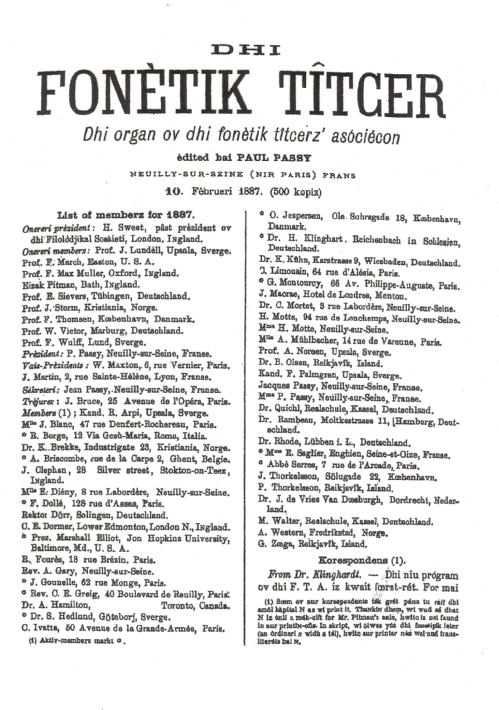
The August 1886 issue of
The Phonetic Teacher contains the
following announcement: ‘M. Passy has left Paris for Stockholm, whither
he is commissioned by the Government, to report on the proceedings of
the third philological Congress of the North’ (p. 3). Passy gave a brief
account of his visit in the September 1886 issue, but the official
report, published the following year, is much more detailed, and
provides a riveting narrative of Reform activities prior to, at and
immediately following this important Congress.
Passy, it should be remembered, was largely self-taught in phonetics,
and claimed he had gained his first introduction to the study of
foreign phoneticians via correspondence with Franke and Jespersen (it
seems possible that, having read Franke’s 1884 pamphlet, Passy wrote to
him and Franke put him in touch with Jespersen). In 1886, the
correspondence with Jespersen was continued, and he was told about the
forthcoming congress in Stockholm. It was therefore Passy himself who
asked to be sent to Stockholm as an official representative of the
French government: he had heard from Jespersen that there would be an
attempt to promote Reform ideas similar to that at the previous year’s
Giessen Congress in Germany, and he was eager to collaborate in this
venture, aside from wishing to strengthen ties with the Scandinavian
phoneticians, who already appeared to be among the most active reformers
(see p. 12, foot).
This was not Passy’s first official visit; he had previously been
sent on a mission to the USA to study the organisation of primary
education in that country, and in 1885 he had been to Iceland to study
its institutions and language and literature (pp. 1–2). His report on
the Stockholm Congress (Passy 1887b) is not a complete one but is
limited to the part of the proceedings which had motivated him to attend
the Congress, hence the title of his report,
Le Phonétisme au Congrès de Stockholm (‘Phonetism [a neologism of Passy’s invention?] at the Stockholm Congress’).
Although his main interest always remained the practical
possibilities of phonetics for language teaching (in 1886 he founded the
Phonetic Teachers’ Association which was later to become the
International Phonetic Association (IPA): see below), he also realised
that the phonetics of French was a rich field for further investigation.
Indeed, he had already begun to issue textbooks in phonetic script for
French schoolchildren learning to read (
Premier livre de lecture, 1884) and for learners of French as a foreign language (
Le français parlé. Morceaux choisis à l’usage des étrangers avec la prononciation figurée, 1886a), these in addition to his (1886b)
Les éléments d’anglais parlé and an earlier textbook for the learning of English published in London.
The fruits of his studies in the phonetics of French over this period are contained in his (1887a)
Les sons du français.
In this work, all the qualities are apparent which made Passy such a
persuasive and influential advocate for phonetics. As Jones (1941: 39)
remarked, ‘He succeeded in establishing phonetics as a “living” science
–– thus making it stand out sharply from various other academic subjects
pursued in many modern universities’. Similarly, Collins and Mees
(1998: 23–24) have defined his overall contribution as being related to
his ‘ability to refine and simplify the complexity of phonetic and
phonological information so as to produce an easily learnt framework
which can be widely utilised’. They suggest that his Christian Socialist
beliefs may have influenced his deliberate clarity of exposition, in
which the elaborate theory of some of his sources is honed down to the
essentials in a manner understandable to the non-specialist reader
(including, of course, many teachers of languages). According to Collins
and Mees (1998: 174), Passy 'considered phonetics to be in great
measure a useful tool in language teaching –– a means by which human
beings could establish better understanding with each other –– and,
consequently, found much in the directness and empiricism of Bell, Ellis
and Sweet to attract him. [. . .] The essentially practical linguistic
approach of the British school had more appeal for Passy than the more
objective, experimentally-based researches of his fellow countryman,
Rousselot, or the "misplaced striving for physiological accuracy" which
coloured the work of certain German phoneticians in the late nineteenth
century (Kohler 1981)'. Thus, in
Les sons du français, Passy
does not overload the reader with excessive detail or transcriptional
complication in the way Bell, Ellis and Sweet were at times prone to do.
This book was to be followed up by further academic work in the field of phonetics. In an article of 1888 in the newly-founded
Phonetische Studien
(Passy 1888) and in a doctoral thesis submitted three years later
(published as Passy 1891a), he built on work by Bell and Sweet in
investigating the articulation of vowel sounds, and this work was later
to form an important inspiration for Daniel Jones’s Cardinal Vowel
system (Collins and Mees 1998: 175). The second thesis he submitted to
gain his Doctorat-ès-Lettres was a phonetic account of modern Icelandic
(Passy 1891b).
Although these relatively academic studies increased his standing in
the field of phonetics (and were later to gain him a university
position), Passy’s chief interest was always in the applications of
phonetics to teaching children to read, and to modern language teaching.
In 1893 he published a further pedagogic work, his
Elemente der gesprochenen Französisch, and, in 1897, a jointly compiled
Dictionnaire phonétique de la langue française (Michaelis and Passy 1897), the first attempt at a pronouncing dictionary of any European language to make use of IPA symbols.
As Jones (1941: 37–38) remarks, when still a young man Passy had
realised that his qualifications were such as to assure to him a
brilliant academic career should he choose to devote all his energies to
phonetic science. However, his interests were wider, and he decided
only to devote to phonetics energies which he considered ‘necessary to
discharge conscientiously his professional obligations and to earn his
living in an honorable manner’. Like Sweet, then, Passy could have had a
more distinguished ‘academic’ career, but he deliberately rejected
university academic prestige in favour of other, more ‘practical’
activities.
Passy’s work was clearly significant internationally (see above), but
it also played an important role in bringing about the developments in
France which led to the official recognition and approval of ‘Méthode
directe’ at the beginning of the twentieth century (Galazzi 1992: 117).
Apart from his intensive work on behalf of the Association
phonétique, Passy both gave and organised private lessons in phonetics
and French pronunciation at his home in Bourg-la-Reine,
Neuilly-sur-Seine. These attracted many participants, with a large
number of them coming from abroad (Daniel Jones was to be one such
visitor, in the early years of the twentieth century). He was often
invited to give lectures and courses in different universities, both in
France and abroad. For him, teaching was a kind of mission, and he
gladly devoted more time to it than to purely academic research. Even
so, he became a university teacher, almost in spite of himself (‘presque
malgré lui’, as Galazzi (1992: 123) puts it). In 1892 Bréal invited him
to lecture at the Sorbonne on the contributions phonetics could make to
language teaching, and in January 1894 a new Chair in General and
Comparative Phonetics was created for him in Bréal’s department in the
École des Hautes Études. By 1897 he had risen to become an assistant
director (‘directeur adjoint’) of the School.
In 1896 he began to give the lectures and practical classes in
phonetics at the Sorbonne whose significance Daniel Jones (1941: 33) was
later to describe in the following terms: ‘It’s no exaggeration to say
that the success which has attended practical phonetics all over the
world is to be attributed largely to Passy’s precept and practice
there’. The classes seem to have always been full, sometimes to
overflowing. Incidentally, Passy was the first teacher at the Sorbonne
to insist that women should be allowed to attend his classes, and a
similar attitude later characterised the appointments his pupil Daniel
Jones made in the Department of Phonetics, University College, London
(Collins and Mees 1998: 256).
In 1897 the
Société pour la propagation des langues étrangères en France
(Society for the Promotion of Foreign Languages in France) launched an
essay competition for the year 1898 on the theme ‘De la méthode directe
dans l’enseignement des langues vivantes’ (On the direct method in
modern language teaching). Passy contributed an essay with the same
title which was published in pamphlet form the following year under the
auspices of the IPA (Passy 1899).
In this essay, Passy is careful to distinguish his own suggested
method at once from a purely natural method (his is based on and appeals
to reason and from the work of Gouin, which seems to him to
over-emphasize comprehension over production. He is also at pains to
stress that in his conception the mother tongue does not need to be
banished entirely from the classroom (thus distinguishing himself from
Berlitz). The contributions of translation and grammar are given their
due place. All in all, then, the essay presents a reasoned and balanced
argument in favour of a ‘direct methodology’ (in Puren’s (1988) sense)
which is well-attuned to the realities of school-based language teaching
at an elementary level. Perhaps surprisingly, the essay was only
awarded second prize in the competition for which it had entered, but
its contents were to be diffused widely, via the IPA.
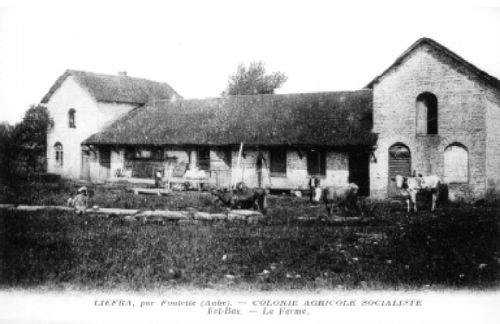
Passy was to remain in his position at the École des Hautes Études
until his retirement in 1926, apart from four years from 1913 when he
was dismissed on political grounds (as a result of his publicly opposing
an extension in the period of compulsory military service). This is
just one example of the many-sided nature of Passy’s career. Aside from
his pacifist and Christian evangelical activities (the latter reflected
in his editorship of the journal
L’Espoir du monde), in the
late 1890s he had become a committed socialist, and he promoted a
variety of causes via lectures, meetings and various practical
enterprises with the same zeal he had devoted to spelling reform and the
establishment of the IPA. Indeed, despite his practical linguistic
achievements, they only occupied a secondary place in his life, and his
autobiography,
Souvenirs d’un socialiste chrétien (Passy
1930–32), devotes relatively few pages to them. First and foremost he
was a militant Christian Socialist, and when he retired from his
academic post it was to found a cooperative agricultural community which
he named Liéfra (Li = Liberté, é = égalité, fra = fraternité). There,
with others, he attempted to put into practice his ideal of a life lived
close to nature which would combine fundamental Christianity, socialism
and language teaching and learning (Collins and Mees 1998: 23).
Notes
The above essay by Richard Smith (uploaded here in 2007, slightly
modified in 2018) is adapted from Introductions to different volumes in
Howatt and Smith 2002. Passy’s own (1930–32) autobiography,
Souvenirs d’un socialiste chrétien,
is one source for the details of his career presented here; also, Anon.
2006, Collins and Mees 1998; Galazzi 1992; Jones 1941; and Passy 1887b.
Source for photos: Anon. 2006.
References
Collins, Beverley and Inger M. Mees. 1998.
The Real Professor Higgins: The Life and Career of Daniel Jones. Berlin: Mouton de Gruyter.
Anon. 2006. 'Paul Passy, fondateur de «L’Espoir du Monde», militant du socialisme chrétien et de la phonétique'.
L'Espoir du Monde no. 128 (October 2006)
. Online: http://www.frsc.ch/f/documents/SCEM128oct06.pdf
Galazzi, E. 1992. ‘1880–1914. Le combat des jeunes phonéticiens: Paul Passy’.
Cahiers Ferdinand de Saussure 46: 115–29.
Howatt, A.P.R. and Richard C. Smith (eds.). 2002.
Modern Language Teaching: The Reform Movement (five volumes). London: Routledge.
Jones, Daniel. 1941. ‘Paul Passy’ (Obituary). Le maître phonétique, July–Sept. 1941: 30–39.
Kohler, K. 1981. ‘Three trends in phonetics: the development of
phonetics as a discipline in Germany since the nineteenth-century’. In
Asher, R.E. and E.J.A. Henderson (eds), Towards a History of Phonetics: In Honour of David Abercrombie, Edinburgh: Edinburgh University Press.
Michaelis, H. and P. Passy. 1897. Dictionnaire phonétique de la langue française. Hannover: Meyer.
Passy, Paul. 1884.
Premier livre de lecture. Paris.
–––––– 1886a. Le français parlé. Morceaux choisis à l’usage des étrangers avec la prononciation figurée. Heilbronn: Henninger.
–––––– 1886b.
Les éléments d’anglais parlé. Paris: Firmin-Didot.
–––––– 1887a
Les sons du français: leur formation, leur combinaison, leur représentation. Paris: Firmin-Didot.
–––––– 1887b.
Le phonétisme au congrès philologique de Stockholm en 1886. Rapport présenté au Ministre de l’instruction publique. Paris: Delagrave & Hachette.
–––––– 1888. ‘Kurze Darstellung des französischen Lautsystems’ (in 3 parts). Phonetische Studien 1: 18–40; 115–30; 245–56.
–––––– 1891a. Etude sur les changements phonétiques et leurs caractères généraux. Paris: Firmin-Didot.
–––––– 1891b. De Nordica Lingua. Paris: Firmin-Didot.
–––––– 1899. ‘De la méthode directe dans l’enseignement des
langues vivantes’. Paris: Colin. [Published as a special supplement to Le maître phonétique, May 1899.]
–––––– 1930–32. Souvenirs d’un socialiste chrétien, 2 vols. [Vol. 1, 1930; Vol 2, 1932.] Issy-les-Moulineaux (Seine): Editions ‘Je sers’.
Puren, Christian. 1988. Histoire des méthodologies de l’enseignement des langues. Paris: Nathan-Clé International.


